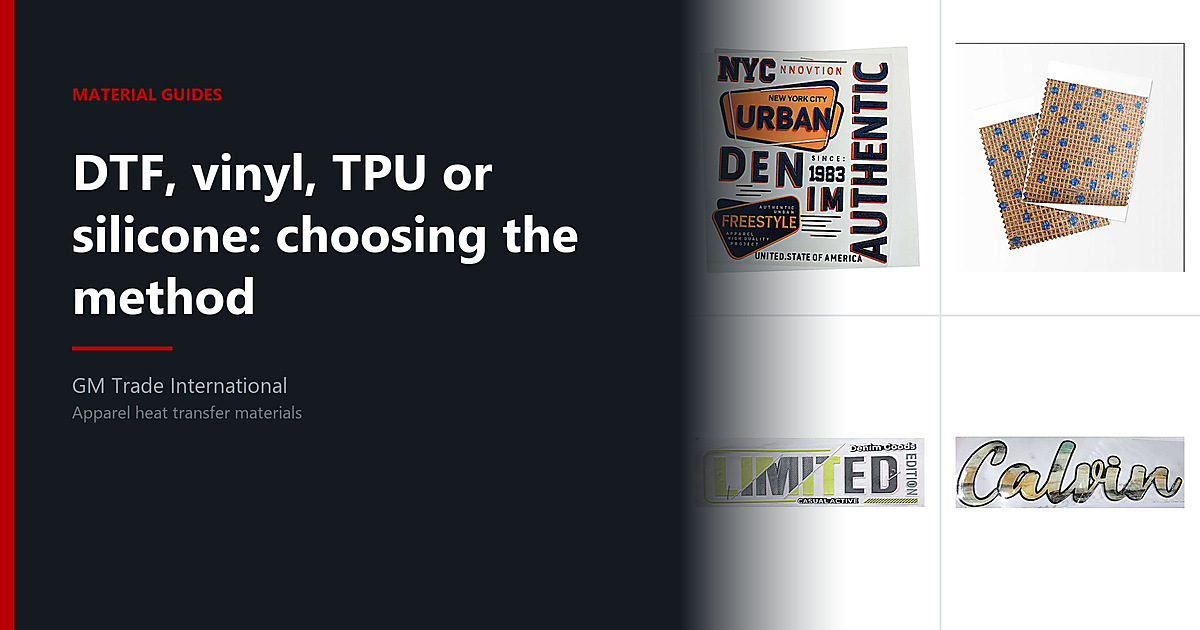
Heat transfer vinyl types explained: PU, flock, high-density, foam, metallic and 3D
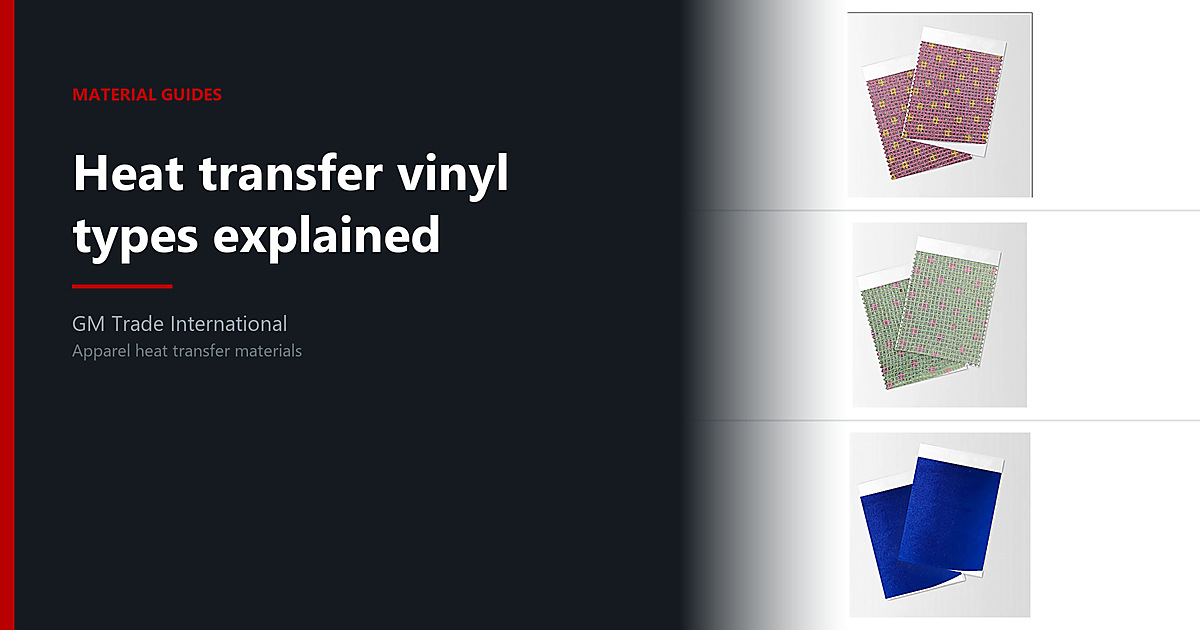
“Heat transfer vinyl” covers a wide family of materials that behave quite differently once they are on a garment. Buyers new to the category often choose on price alone and then find the finish is wrong for the product. This guide sets out what separates the main types.
PU vinyl
Polyurethane vinyl is the everyday workhorse. It is thin and flexible, sits close to the fabric, and has a soft hand — you feel the design far less than with a thick material. Because it is thin it cuts cleanly, which matters for small lettering and fine detail. It stretches reasonably well with knitted fabric, so it suits t-shirts, hoodies and sweatshirts. If you are not sure what to specify, PU is usually the sensible starting point.
High-density vinyl
High-density material is built up thicker so the design stands proud of the fabric with a defined, moulded edge. It reads as a premium, sporty finish and is common on jerseys and sportswear, particularly for numbers and names. The trade-off is hand feel: a large high-density design is noticeably stiffer than the same design in PU, and it is less forgiving on very stretchy fabric.
Flock vinyl
Flock carries a short velvet pile, giving a suede-like surface with a matte, raised finish. It is the closest vinyl gets to the look of embroidery, without the stitch time or the thread cost, which is why it is often specified for retro and heritage designs. The pile does trap dust and lint more than a smooth finish, and fine detail is harder to hold than in PU.
Foam vinyl
Foam — often called puff — expands under heat to lift the design into a soft, rounded profile. The effect is dramatic on caps, hoodies and jersey chest prints. Because the expansion happens during pressing, foam is the least forgiving material to run: too little heat and it does not rise, too much and the surface distorts. Test it properly before a production run.
Metallic vinyl
Metallic gives a mirror-bright gold, silver or chrome-effect face. It has real impact under stage and retail lighting, which is why it turns up on fashion tops and party wear. Metallic finishes generally tolerate less stretch and less aggressive washing than plain PU, so they suit fashion pieces more than heavy-duty workwear.
3D vinyl
3D materials are built for height, giving a sculpted rather than printed look. Like foam, they reward careful setup and punish guesswork. They are usually specified where a logo needs to read as a moulded badge rather than a print.
Fabric-textured vinyl
Sherpa, jacquard, oxford and similar faces give the transfer the look and hand of real cloth. These are used where a decorated panel should not look like a print at all — outerwear, jackets and fashion pieces most often.
Choosing between them
Work backwards from the garment and the buyer’s expectation. Fine lettering on a soft t-shirt points to PU. A jersey number that must look moulded points to high-density. An embroidery look without embroidery cost points to flock. A statement chest print points to foam or 3D. A fashion piece under lights points to metallic.
Whatever you choose, the application settings differ from material to material — sometimes substantially. Always work from the data sheet for the specific material you have bought, and test before committing to a run.