DTF, vinyl, TPU or silicone: choosing the right heat transfer method
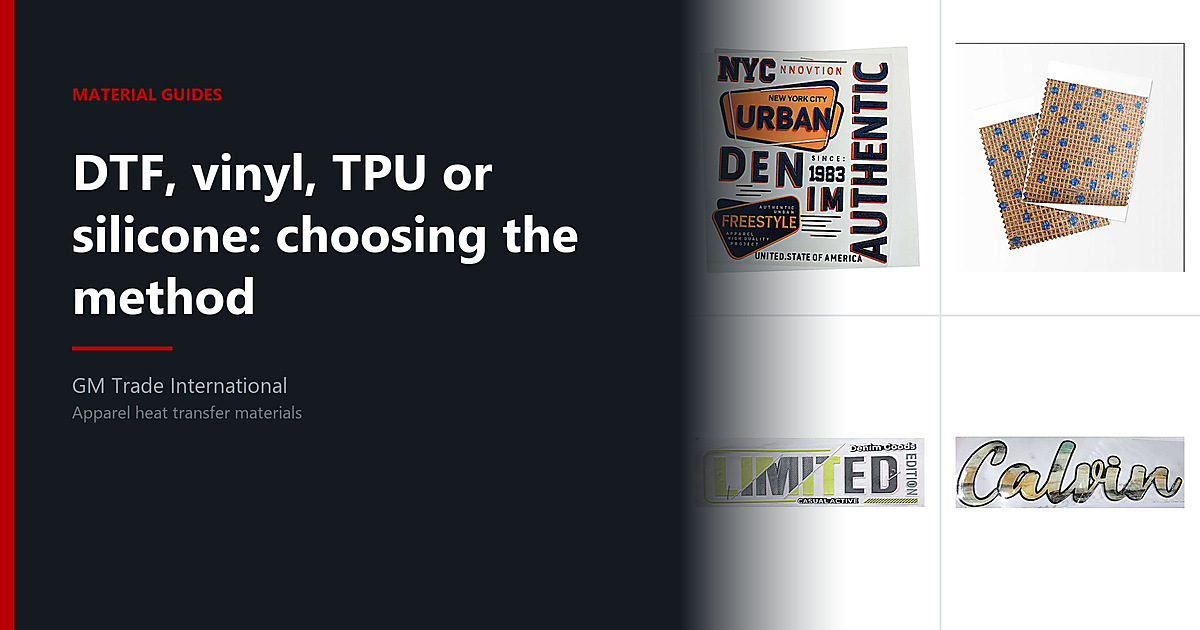
Most decoration jobs can be done more than one way. Choosing well depends less on which material is “best” and more on the artwork, the run length and the finish the buyer is expecting.
Cut vinyl
Vinyl is cut to shape and weeded, then pressed. It excels at solid shapes, lettering and numbers in one or two colours — team names, squad numbers, simple logos. Cost per piece is low and the range of finishes is wide.
Where it struggles is complex artwork. Every additional colour is another cut, another weed and another press, so a full-colour photographic design is impractical. Very fine detail is limited by how small a shape can be weeded without lifting.
DTF transfers
Direct-to-film transfers are printed in full colour, so artwork complexity costs nothing extra. Gradients, photographs and multi-colour illustration are all straightforward, and there is no weeding — the transfer arrives ready to press.
DTF suits short runs and varied designs particularly well, since each design is just another print. The finish is a printed one; where a buyer expects height, texture or a moulded edge, DTF alone will not deliver it, though emboss and puff variants close some of that gap.
TPU logos
Thermoplastic polyurethane gives a smooth, flexible, durable face that moves with the fabric rather than cracking across it. It is the standard choice for club crests, country badges and sponsor marks on sportswear, where the decoration has to survive stretch and repeated washing.
TPU logos are usually produced to a specific design rather than cut from stock, so they suit repeat work — a crest you will apply thousands of times — better than a one-off.
Silicone prints
Silicone gives a soft, slightly rubbery raised face with strong colour and a premium hand. It holds height well, which is why it is specified for raised chest logos and branded detail where the decoration should feel substantial.
It is generally the most expensive of the four per piece, and the least suited to very fine detail. Where a buyer is paying for a premium feel, it earns its cost; where they are not, it will not.
A rough decision path
• Full-colour or photographic artwork, short runs, many designs → DTF.
• One or two colours, lettering and numbers, longer runs → cut vinyl.
• Sportswear crests that must survive stretch and washing → TPU.
• Premium raised chest branding where feel matters → silicone.
• An embroidery look without embroidery cost → flock vinyl or an embroidery-effect TPU print.
None of this is absolute. If you are weighing two options for a specific job, tell us the garment, the artwork and the run length and we will give you a straight answer — including when the cheaper option is the right one.